
Women Who Led the Way
Equality Has Never Had Just One Story
Long before Women Deserve Better had a name, women were fighting for the right to vote, learn, work, own property, practice medicine, raise their children, live free from violence, and participate fully in public life. Many also rejected the idea that women’s advancement required sacrificing their children.
Explore some of the women, ideas, and movements that helped shape this history
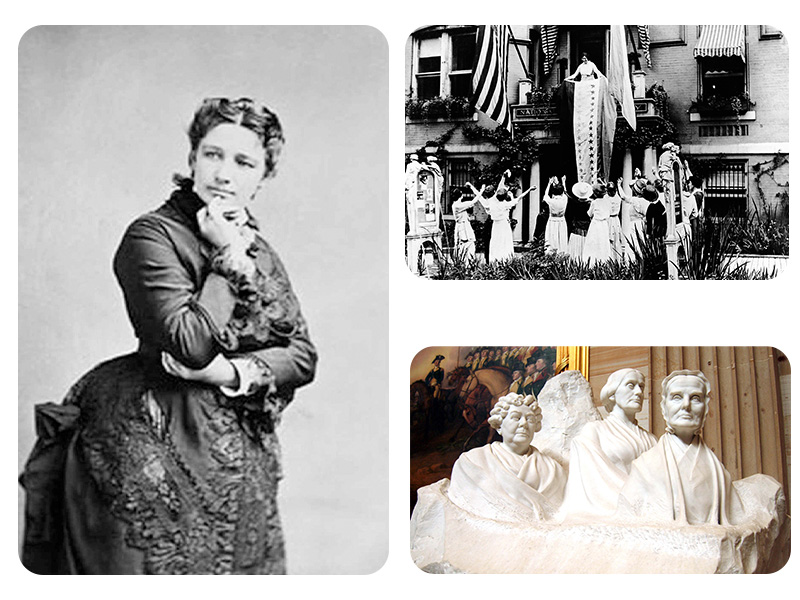
A Bigger Story
The Women’s Movement Was Never One-Dimensional
Bigger Than One Issue
The movement spanned voting rights, educational access, financial security, and systemic reforms to protect the vulnerable.
Diverse Backgrounds
Leaders held vastly different philosophies, strategies, and deeply held beliefs, representing a rich fabric of perspectives.
A Shared Thread
Every pioneer worked to systematically dismantle the real barriers confronting women, from workplace abuse to poverty.
Timeless Questions
Their historically situated struggles asked questions about dignity, support, and equality that remain vital today.
The Fight for Equality
Claiming a Place in Public Life
Women challenged laws, customs, and institutions that denied them a voice in decisions affecting their own lives.
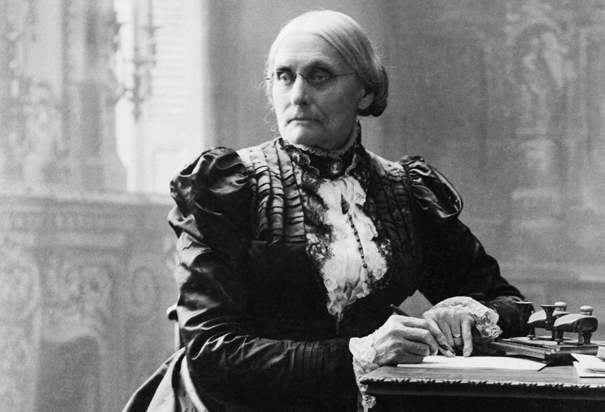
Susan B. Anthony
1820-1906
Susan B. Anthony devoted her life to expanding women’s political, economic, and legal rights. Her newspaper, The Revolution, also repeatedly condemned abortion while connecting it to the injustices women faced. Anthony’s own “Social Purity” speech included abortion among the consequences of women’s exploitation and argued that lasting change required addressing causes rather than simply punishing consequences. For Anthony, empowering women—through the vote, greater independence, and equality within society—was central to confronting the conditions surrounding abortion.
Elizabeth Cady Stanton
1815-1902
Elizabeth Cady Stanton was one of the central figures of the nineteenth-century women’s rights movement and a longtime collaborator with Susan B. Anthony. A wife and mother as well as an organizer, writer, and speaker, Stanton challenged laws and customs that limited women’s education, independence, property rights, and political
voice. Her work also addressed abortion within the larger circumstances women faced. The historical material collected by Women Deserve Better presents Stanton as opposing abortion while connecting it to women’s unequal status, lack of independence, and men’s responsibility for the circumstances surrounding it. Together with Anthony, she published The Revolution, where abortion was discussed alongside suffrage and other questions of women’s rights.
Mattie Brinkerhoff
fl. 1860s
Mattie Brinkerhoff was a Midwestern suffrage lecturer who campaigned alongside Susan B. Anthony, Elizabeth Cady Stanton, and Olympia Brown and wrote for The Revolution. Brinkerhoff explicitly opposed abortion, but her writing focused just as powerfully on the
circumstances that could drive women to it. In 1869, she argued that when a woman ended the life of her unborn child, it was evidence that “by education or circumstances she has been greatly wronged.” She advocated women’s education, independence, legal rights, and freedom from coercion as part of the solution.
Alice Paul
1885-1977
Alice Paul carried the fight for women’s equality into a new generation. After years of suffrage organizing, protest, arrest, and imprisonment, she helped lead the campaign that culminated in the Nineteenth Amendment and later authored the original Equal Rights Amendment. Decades later, Paul objected to linking the ERA with abortion. Women Deserve Better co-founder Pat Goltz recalled discussing abortion directly with Paul, and Paul’s longtime colleague Evelyn Judge recalled Paul describing abortion as “the ultimate exploitation of women.” Paul also told Goltz that earlier leaders of the women’s movement had opposed abortion—an exchange that helped inspire WDB’s later research into this history.
Victoria Woodhull
1838-1927
Victoria Woodhull challenged nearly every convention surrounding women’s political and economic independence, becoming a newspaper publisher, suffragist, and the first woman to run for president of the United States. She also wrote explicitly against abortion. Woodhull connected abortion with injustice toward both women and children and argued that its remedy lay in greater freedom and equality for women. Her writings treated women’s rights and opposition to abortion not as competing ideas, but as connected parts of a broader vision of justice.
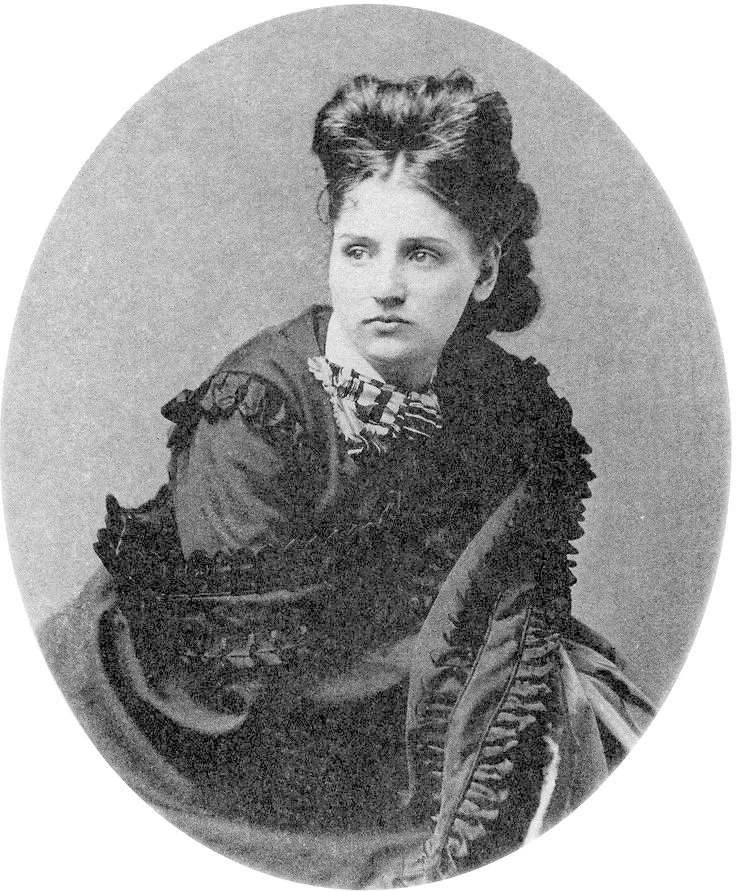
“Abortion is only a symptom of a more deep-seated disorder of the social state…”
— Tennessee Claflin from “My Word on Abortion and Other Things” Woodhull & Claflin’s Weekly, September 23, 1871
Education, Work, Opportunity
Opening Doors That Had Been Closed
Women also challenged assumptions about what women could study, where they could work, what professions they could enter, and what they could accomplish.
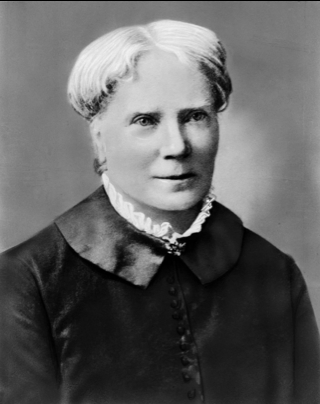
Dr. Elizabeth Blackwell
1821-1910
Elizabeth Blackwell saw entering medicine as more than a career choice. It became what she called a “moral struggle” to open the profession to women. In 1849, she became the first woman to receive a medical degree from an American medical school and later helped establish institutions where women could train and practice as physicians. Blackwell also wrote explicitly against abortion. She was disturbed that the term “female physician” had become associated with abortion providers and believed women entering medicine could represent something better: expanding women’s opportunities while protecting the lives and well-being of women and children.
Louisa May Alcott
1832-1888
Long before Little Women made her famous, Louisa May Alcott knew how difficult it could be for a woman to support herself. She worked as a teacher, seamstress, nurse, companion, editor, and writer, determined to help support her family and prove women’s capacity for independence. Her writing challenged narrow expectations for women’s lives, and she later became an active supporter of women’s suffrage. Alcott’s work also reflected opposition to abortion, including through stories that portrayed the exploitation and desperation surrounding it. For Alcott, expanding women’s freedom meant opening doors to meaningful work, independence, and a greater voice in their own futures.
Clara Barton
1821-1912
Clara Barton repeatedly stepped into roles women were rarely expected—or permitted—to fill. She fought for equal pay as a teacher, became one of the first women to hold a federal government position, brought supplies and care directly to soldiers during the Civil War, and later founded the American Red Cross. Barton also supported women’s suffrage and credited women such as Susan B. Anthony with opening opportunities for those who followed. Unlike Blackwell, however, our historical material does not give us a clear personal statement from Barton about abortion. Her place in this collection is rooted in the doors she opened for women and the broader movement for women’s equality.
“The true mission of Society is to provide the conditions, legal, moral, economic, and obstetric, which will assure happy and successful motherhood.”
— Estelle Sylvia Pankhurst, From “The True Mission of Society,” Save the Mothers, 1930
Beyond Legal Equality
Changing the Conditions of Women’s Lives
For many reformers, equality meant more than changing laws. It also meant confronting the circumstances that shaped women’s everyday lives.
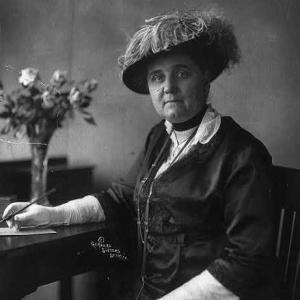
Jane Addams
1860-1935
Jane Addams believed lasting social change meant addressing peoples problems at their roots. At Hull House in Chicago, she and her fellow residents worked alongside a largely working class and immigrant community, developing child care, education, health services, employment assistance, and other
practical resources as needs emerged. Addams saw this work not simply as charity, but as solidarity grounded in the dignity of every person. Her approach began with listening: understand the challenges people faced, then work together to change the conditions behind them.
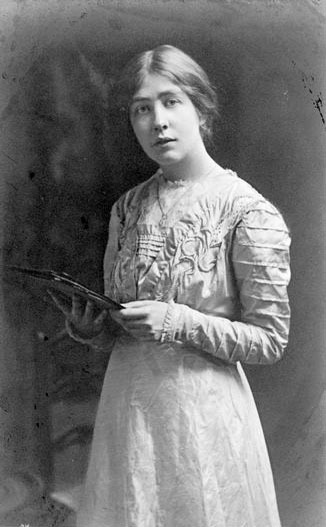
Estelle Sylvia Pankhurst
1882-1960
Sylvia Pankhurst began as a militant suffragist but increasingly turned her attention to the practical conditions shaping women’s lives. She established a daycare, Montessori school, affordable restaurants, and a toy factory that provided women with better-paying work. As a single mother, Pankhurst also wrote about maternal and child health and opposed abortion as a response to social hardship. Instead, she
argued that society should create the “legal,
moral, economic, and obstetric” conditions
necessary for women and their children to
flourish.
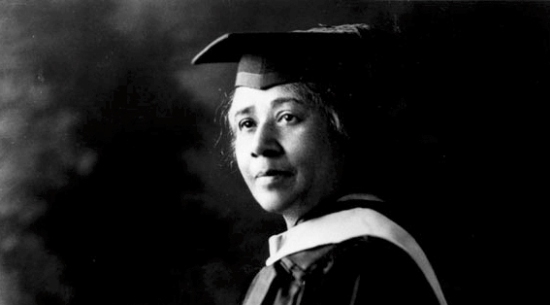
Dr. Anna Julia Cooper
1858-1964
Anna Julia Cooper understood that equality on paper meant little without genuine access
to education, opportunity, and community support. Born into slavery, she became a teacher, scholar, writer, and one of the most influential Black intellectuals of her era. Cooper fought for rigorous education for Black students, helped establish community organizations, worked with poor and marginalized families, and at age 57 took in five orphaned children. She argued that women’s advancement should never come at the expense of other marginalized people, but should be part of a broader pursuit of human dignity and equality.
Advancement for early women pioneers involved both establishing constitutional rights on paper and securing the actual, practical conditions for full participation in civic life.
A Different Vision
Did Equality Require Abortion?
As women fought for greater freedom and opportunity, some also wrote and spoke about abortion within the broader circumstances women faced—including poverty, abandonment, inequality, violence, lack of support, and limited control over their own lives. Their arguments were not identical, and their words belong to the eras in which they lived. But their stories complicate the idea that women’s equality and abortion have always been inseparable.
For these women, the question was not only what choices women should have. It was also: What would need to change so women had better choices in the first place?
Then and Now
The Questions Have Changed.
Some Haven’t.
What does equality require? What keeps women from pursuing their education or careers? What happens when pregnancy, parenthood, work, school, safety, and economic security collide? And what resources and support would give women greater freedom to build the lives they envision? These questions have taken different forms across generations. They continue to shape the work of Women Deserve Better today.